Cardiac Arrest – a Medical Emergency
When a person suddenly collapses, loses consciousness, and is no longer breathing or is breathing abnormally, they are likely in cardiac arrest. In Canada, an estimated 35,000 cardiac arrests happen each year, and less than 10% who have an out-of-hospital cardiac arrest survive.
But quick action by bystanders – immediately doing CPR (cardiopulmonary resuscitation) and using an AED (automated external defibrillator) – can double the chance for survival.
Cardiac Arrest and AEDs
Bystanders stepping up to perform CPR will keep the blood circulating to the brain and other vital organs, but only an AED can restart a heart.
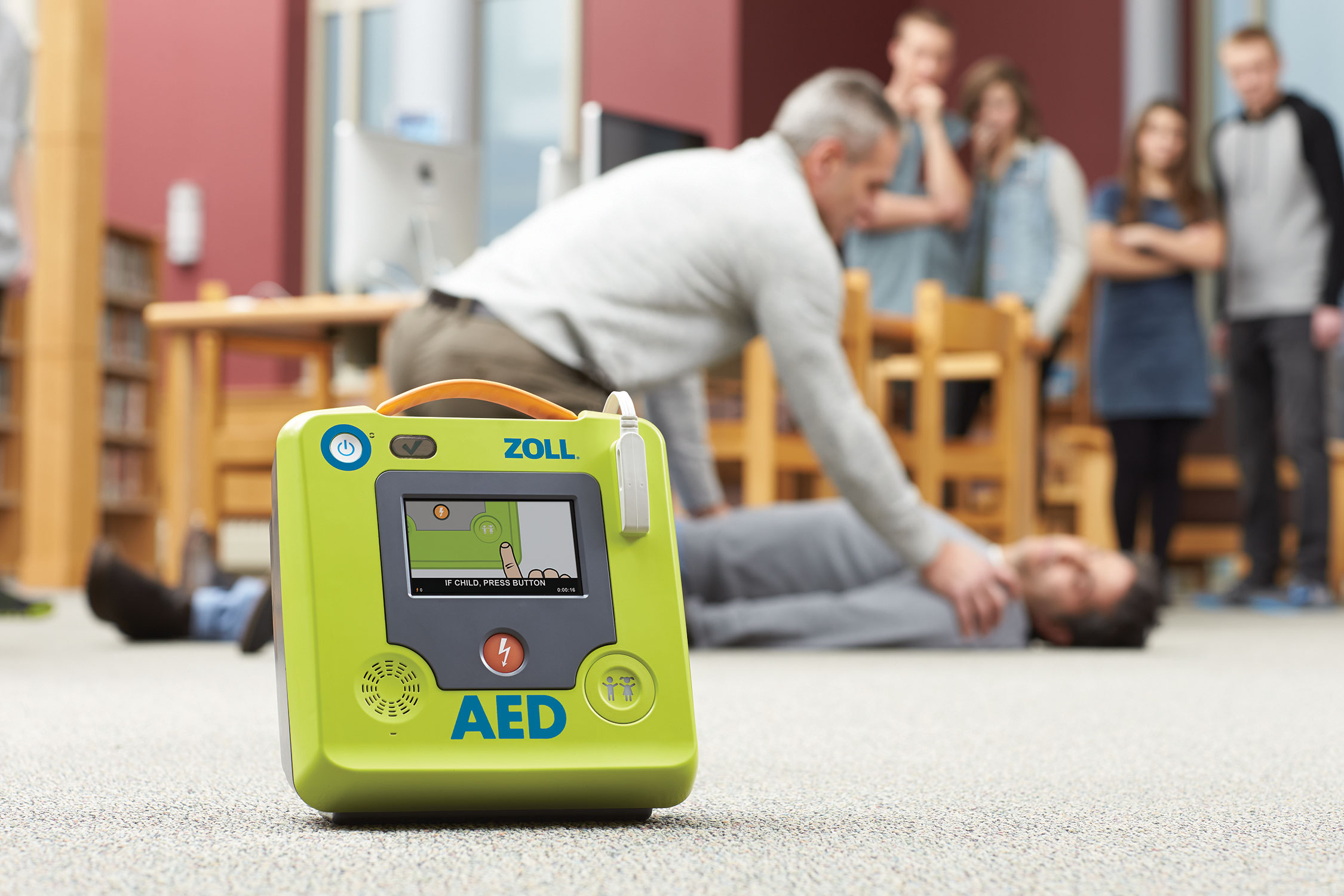
An AED is portable smart device that’s easy to use. It analyzes and looks for shockable heart rhythms, and then delivers an electrical shock if needed. All you need to do is follow the voice and visual prompts.
Shared Health and AEDs
AEDs are required to be registered with Shared Health to provide information to 911 dispatchers of AED locations. This enables dispatchers to assist those trying to help a cardiac arrest victim to find the nearest AED and guides them through the proper use of the machine.
Download the AED Registration Form (PDF)
To find out more about which public places are required to have an AED on-site, the type of signage required, how to register an AED and how to comply with other new requirements under The Defibrillator Public Access Act, please read the Questions and Answers.
The province does not consider the use of an AED as a medical act. A medical director is not required to purchase or use an AED.
Does your facility need an AED?
AEDs are most useful if placed in locations where large groups of people gather, or where emergency medical services (EMS) may take a longer time to reach. Some sites suggested are:
- High-rise apartment blocks or businesses
- Central, easy access locations in remote areas
- Major sports, recreation or community facilities.
To see if your facility is designated in the legislation as requiring an AED, click here to view the provincial regulations.
How to register your AED
Once you have an AED in place, it is vital that you register it with the Shared Health AED Registry. This helps emergency dispatchers know where to find your AED and enables them to assist 911 callers to locate the device in an emergency. Registering your AED can mean the difference between life and death.
Please note: Legislation requires new AED installations to be registered within 30 days; any changes must be reported within 15 days.
Download the AED Registration Form (PDF)
Use signage to share your AED’s location.
Once you’ve installed your AED, let everyone know where the unit is located so it can be used in an emergency. Signage can typically be purchased from your AED distributor. If you have a facility map, consider marking the AED on the map.
Make sure your AED is maintained.
As required by the provincial legislation, AEDs must be maintained. We suggest you follow all recommendations contained in the manufacturer’s guidelines. This includes a monthly check to ensure your unit is operating at its optimal level and replacing parts as needed. Your AED distributor should be able to supply you with replacement parts, which tend to be pads, batteries and/or supplies for your rescue-ready kit.
More information on cardiac arrest, CPR and AEDs
- Automated External Defibrillators in Public Places
- Manitoba’s Good Samaritan Act
- Heart & Stroke’s position statement on “Addressing Cardiac Arrest in Canada”
- Investing in an AED
- General information on AEDs
- Heart & Stroke’s training courses in CPR, AED use and more
Credit: Shared Health